Prefer to read offline? Download this article as a PDF
Let’s start with a quote. You have probably heard this one before.
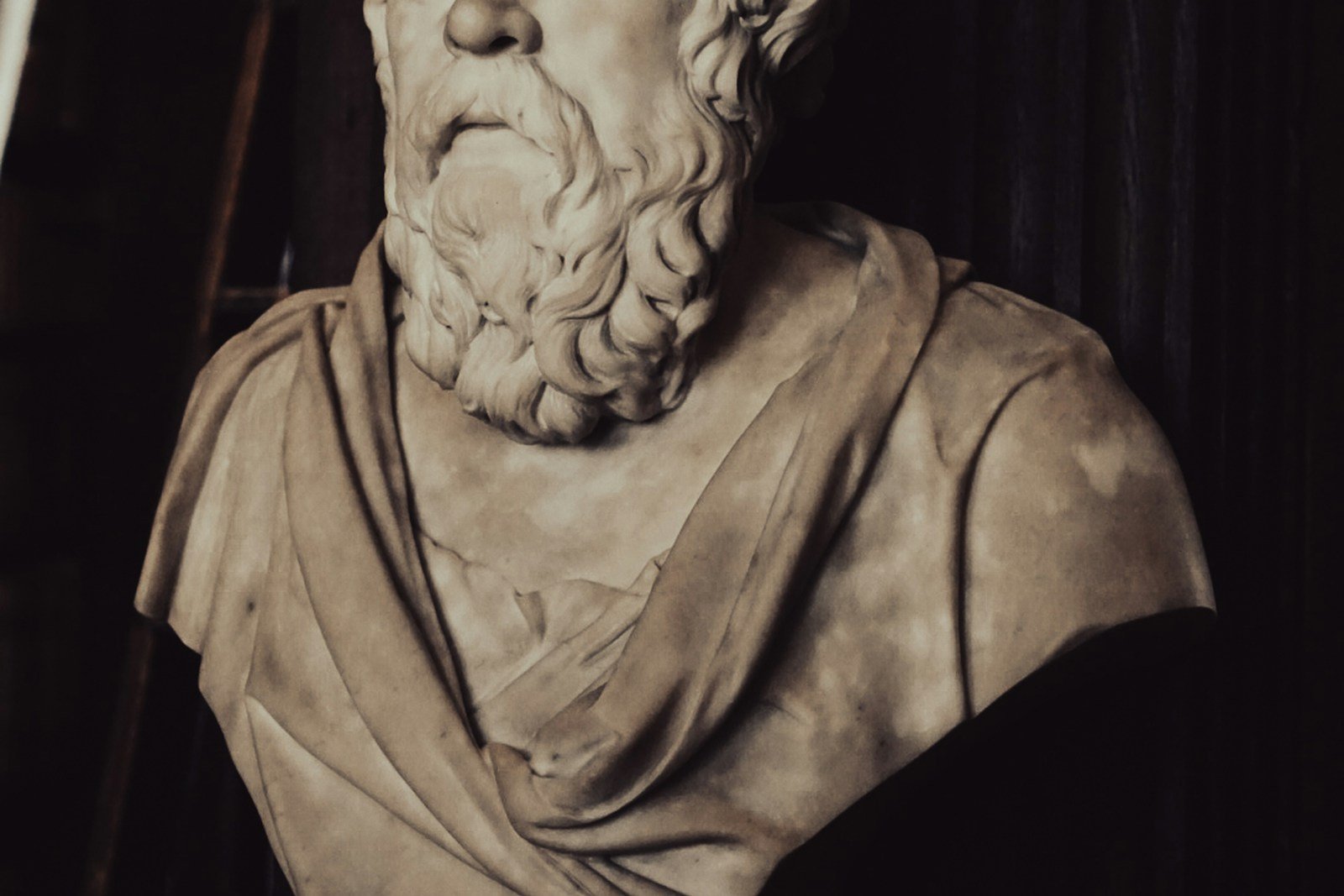
“We are what we repeatedly do. Excellence, then, is not an act, but a habit.”
(Not Aristotle)
It is usually credited to Aristotle, but the words are the historian Will Durant’s, summing Aristotle up in 1926. What Aristotle did say is this:
“As it is not one swallow or a fine day that makes a spring, so it is not one day or a short time that makes a man blessed and happy.”
(Aristotle)
Whoever said what, the point is the same:
One good day does not equal long term success. It requires lots and lots of consecutive good days to get somewhere in life. It requires that you perform well on a daily basis.
It is relatively easy for us to give something our all on one day, to completely put our mind to something and do a great job.
What is harder is following up on this and doing it day after day. Because that uses up a lot of willpower, something many people lack.
That’s why being a top performer requires you to build consistent habits.
Why Some People Seem to Get So Much Done So Easily
Mason Currey’s book Daily Rituals collects the daily routines of well-known writers, artists and scientists. It is tempting to read it looking for the perfect habits, the ones that would make anyone ultra-productive.
It doesn’t have them. These people’s routines had almost nothing in common. Some got up early and worked in the morning, others worked through the night. Some stopped for tea, others didn’t. There is no one best way in the book.
What they shared was simpler. It wasn’t any specific habit that made them productive. It was the fact that they had habits at all. Each had settled on a routine and kept to it, which made their days predictable and close to automatic. They knew what they were supposed to be doing at a given hour without having to think about it.
Look at people who get a lot done and the same thing keeps coming back: their days follow a pattern, and they stick to it.
Whatever you do, habit and routine are a big part of doing it well.
Here is an example.
Imagine if you wanted to become a guitar player, and preferably, a really good one. Now imagine if you were able to make it a habit of practicing consistently for two hours per day. If you kept up that habit for ten years, you’d end up being a pretty good player, right? Even without any special talent or musical education, someone who practices that much will most likely end up being a pretty good guitarist.
Same goes for writing. If you write 1,000 words each day, you’ll have a novel’s worth of words in a few months. Still, so many authors find it hard to be productive. It’s easy to get started writing, to have an idea and write those first few pages. But unless you make that writing into a habit, you will never finish your book.
One last example: studying. For many students, what makes college hard isn’t that the material is too complex to understand. It is getting themselves to open the books and go over their notes consistently. In an exam period it is possible to have one good day and study for eight hours on willpower. Doing that many days in a row is close to impossible.
Without a study habit, grades end up lower than they could have been.
How to Make Your Brain Work for You
Think of habits as a behavioral autopilot, an automatic script that your brain automatically executes in a certain situation. You probably already have lots of habits that you aren’t even aware of. For example, when you put on your shoes, it’s very likely that you’ll always put on one certain side first, either the left or the right. That’s not something you consciously decide every day, it’s a habit that you created for yourself.
This isn’t merely the case for tying your shoelaces either. It goes for every possible imaginable task, be it brushing your teeth or something more complex like studying.
You can have the most boring, unattractive task, something that you really, really hate to do. It causes you to procrastinate endlessly. Whatever it is, it doesn’t matter. Once you establish it as a strong habit, you’ll have an unstoppable urge to perform this task. It will actually take you conscious effort and willpower NOT to do it.
What’s more, our brain actually CRAVES habits. Having to think about things all the time requires energy (remember that a large part of the calories that we eat are used to power our brain). From an evolutionary point of view, our body wants to be as energy efficient as possible, because using up a lot of energy isn’t very good survival-wise. It used to be that food was scarce, and if you used up a lot of energy every day, you were more likely to starve. So when our brain creates habits, it also becomes more energy efficient.
So how do habits work in the brain? The clearest account is Charles Duhigg’s, in his book The Power of Habit. He describes a loop with three parts:
- a cue
- a routine
- a reward
First, there’s the cue. This is the trigger that causes the behavior to start.
Second, there’s the routine (which is the habit itself).
Finally, there’s a reward. This is what your brain uses to imprint this routine into itself and to make sure you repeat it in the future.
Now, when you tried to do something on a regular basis (let’s take studying as an example), you most likely focused on the second part: the routine itself. This sounds logical because it’s the behavior that you’re trying to implement. However, that’s actually the wrong way to go about it.
For example, you might say to yourself: ‘From now on, I’m going to study for two hours every day’. Then one day, you start studying at 2 PM. The next day, it’s 4 PM. The day after, it’s 9 AM. And so for each of these days, there is no single cue when to start. There is no consistent trigger, no environmental cue that tells your brain to take action.
That means that you have to take conscious action to start studying every day. In turn, this means you’ll require willpower.
The second piece that’s missing is the lack of a reward. You would just finish studying and be done with it, without giving yourself a pat on the back or a little gift. So unless you find studying very intrinsically rewarding, there won’t really be any motivator present. And our brain craves these rewards. Rewarding yourself gives the brain a reason to come back for more, the same mechanism that makes food and cigarettes so hard to resist. Have you ever had to use willpower to eat, or to light up a smoke? Unless the food wasn’t very appetizing or you dislike the taste of tobacco, I highly doubt it. On the contrary, for people who are addicted to food or cigarettes, it’s extremely hard not to eat or not to smoke.
So, in effect, by adding a reward to a behavior, you can make yourself ‘addicted’ to it. This allows you to remove willpower from the equation.
To create a habit, instead of focusing on the behavior itself, you should focus on the cue and on the reward. When you consistently have the same cue, behavior, and reward, your basal ganglia will start to associate these three, and join them together. It’s as if you were a self-programming robot.
Step 1: Choose a Behavior
This is pretty straightforward. You probably have a certain task that you have to do or want to do. Only problem, you can’t get yourself to do it consistently without summoning massive amounts of willpower. The sink is full of dirty plates, but you really don’t feel like washing the dishes. You’ve got an important exam next week, and somehow it just seems impossible to do more than five pages each day. You’re working on a novel, but you can’t get yourself to consistently hit your daily word target.
As we’ve said before, willpower is unreliable: at the end of a hard day’s work, the chances of you performing a task on willpower alone are close to zero. So it’s important that you automate these tasks, with no conscious effort required.
Step 2: Choose a Cue
This is what has to trigger your brain into performing the habit. The most obvious way to set a cue is to use a certain time of day. For example, if you want to start an exercise habit, make 5 PM your exercise time.
A cue doesn’t necessarily have to be time based, though. It can also be environmental. For example, if your stomach is full after eating, that can also be your cue to start washing the dishes.
Once you set a consistent cue that precedes a certain routine behavior, your brain will start to associate this cue with the behavior. Once that happens, the cue will automatically start to trigger this behavior, without any conscious effort from your part. You’ll just start on autopilot.
Step 3: Choose a Reward
Finally, you need something that tells your brain: ‘this routine behavior is good, do it again’. Your brain has to learn to associate the behavior with positive feedback, a reward that feels good. This reward can be anything, but it doesn’t have to be big. You can reward yourself with a cookie, a cup of tea or whatever it is that you find rewarding. Keep the reward simple and the same from day to day while the habit is forming, so there is nothing new to decide each time.
Now, these rewards are extrinsic rewards, things that don’t naturally follow out of the act itself. But a behavior can be intrinsically rewarding as well. Just performing the behavior by itself can be rewarding enough, without the need to give yourself something tangible afterwards. The best example of this is exercise. If you work out, you feel pretty good afterwards. You might also feel really good about yourself after you’ve studied a chapter in your book, a boost of satisfaction and pride.
That being said, if you think an activity still needs a bit of an extra reward, you give yourself something extra to increase the ‘reward value’ of the routine.
Now, here’s the cool part: over time, the reward will induce a craving. Because you crave the reward, you’ll automatically start to perform the behavior. Because of that, after a while, you don’t even need the reward anymore.
That’s because your brain has started to associate the behavior itself, not just the reward, with the happy feeling. The brain has learned to anticipate the reward, and it is this anticipation that produces the good feeling.
So, to create a habit, choose a cue, a habit, and a reward, and use them consistently every day. In the beginning, you’ll still have to use a lot of willpower. However, it gets easier every time you do it. Each time you perform the behavior, your brain will start to clump the cue, the behavior and the reward closer together, and over time you’ll end up with an automatic habit that requires no mental effort whatsoever.
One warning though: don’t try to create too many habits at once. If you try to do too much at once, you WILL fail. Focus on one habit at a time, stick to it for a while, and once that habit is firmly implanted into your brain, go on to the next one.
But First, Find Your Keystone Habit
“Keystone habit” is Duhigg’s term too.
You might have a ton of habits that you want to implement. However, these could vary from washing the dishes, brushing your teeth or studying one hour each and every day.

Now, these are all fine habits to have, but not all of them have the same impact on your life. There are certain habits, which differ from person to person, that function as a sort of launchpad. A keystone habit is a habit that has the power to completely change the way you view yourself.
Here is an example.
Imagine things are going badly. You are out of work, you have thousands of dollars in credit card debt, and your health has slipped.
In this scenario, making a habit of brushing your teeth might not change much. But what if you started exercising consistently? You start to feel better, and you get stronger and faster. Then a thought arrives: “If I can do this, what else can I do?” So you add another habit: one job application every day.
By the end of the year you are fitter and back at work, and you know you can change the next thing too.
A keystone habit serves as a catalyst to change the way you feel about yourself, and a catalyst to start implementing other habits to improve your life.
For many people, exercise is their keystone habit. But what if you’re already pretty athletic? In your case, exercise might not have the same psychological effect. An alternative keystone habit might then be to save money every month and restore your financial health.
The thing about keystone habits is: they differ from person to person. If you want to identify your own keystone habit, you need to find something that has a strong emotional link. Again, washing the dishes after every meal might not qualify (although in some people it could). Ideally, a keystone habit is something that scares you a bit. It should feel like a challenge, so once you’ve overcome it, it increases your confidence and self-esteem by a significant amount.
A keystone habit is generally something that changes the way you see yourself and allows you to believe that you can change. If you’ve always been messy, and you start making a habit of cleaning up, you transform your outlook from ‘that’s just the way I am’ into ‘If I can change that, I can change anything!’.
Find a keystone habit, implement it, and use that as a lever to create lots of automatic, powerful habits that have the power to completely transform your life.
Breaking a Bad Habit: Keep the Cue, Change the Routine
Bad habits run on the same loop as good ones: a cue, a routine and a reward. You can’t delete a habit once it is wired in, but you can swap the routine in the middle while keeping the cue and the reward, which is how Alcoholics Anonymous turns Friday night at the bar into Friday night at a meeting. The method, the digital-age swaps that work, and how FocusMe keeps the old routine out of reach while the new one beds in, are all in How To Get Rid Of Bad Habits.
FocusMe
Block the sites and apps that pull you off track, on a schedule or a timer, on your computer and phone.
Try it free for 14 daysKnow Which Stage of Change You’re In
Psychologists James Prochaska, John Norcross and Carlo DiClemente describe change as stages in their book Changing for Good: precontemplation, contemplation, preparation, action, maintenance and termination.
Knowing your stage stops you expecting too much too soon. If you’re still contemplating, start by being honest with yourself about the habit; a strict plan can wait. If you’re in maintenance, plan for slips: a slip tells you which cue caught you, it doesn’t mean you’ve failed.
To Conclude
Habits shape our days, and our days add up to our lives. You are what you repeatedly do, remember?
Here’s a suggestion for one habit worth having. Install FocusMe and block social media each time you start work, on your computer and your phone. Once that is routine, the first hour of the day is yours.
Create habits, take willpower out of the equation, and you’re on the right track to getting lots of work done.
FocusMe
Make the focused hour the normal one
Block the sites and apps that pull you off track, on a schedule or a timer, on Windows, Mac, Linux, Android and iPhone.
Start your free 14-day trialNo credit card needed.
FAQs (Frequently Asked Questions)
Why are habits more reliable than motivation?
Motivation can fluctuate depending on mood, energy, or circumstances. Habits, however, are triggered by consistent cues and routines, making them easier to maintain even when motivation is low.
What are the three key parts of a habit?
A cue that triggers the behavior, the routine (the action itself) and a reward that reinforces it. Charles Duhigg calls this the habit loop.
What is a keystone habit?
A keystone habit is a behavior that triggers positive changes in other areas of life. For example, starting a regular exercise routine can improve energy, confidence, productivity, and other habits as well.
How many habits should you try to build at once?
One. Trying to build several at once makes it less likely that any of them sticks.
How can FocusMe help build habits?
FocusMe blocks the apps and sites you choose on a schedule, on your computer and your phone, so the cue for the old routine is not there when the new one is meant to happen.
First published
Want to talk it through? Join the FocusMe community