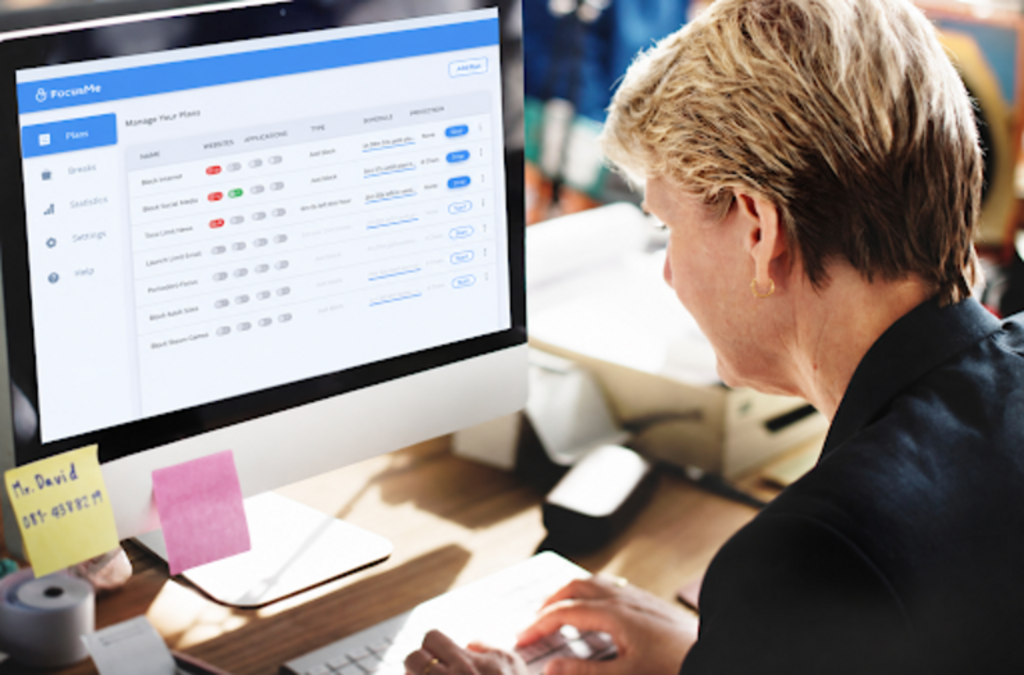
Staying focused is not always about trying harder. Sometimes the problem is that your work routine does not match the way you actually work.
Maybe you focus well in the morning but struggle in the afternoon. Maybe social media is your biggest distraction. Or perhaps you sit down with a clear plan but end up switching between emails, websites, messages, and different tasks.
A good focus system should fit your habits, schedule and goals. It should make focused work easier instead of forcing you to depend on willpower all day.
FocusMe can help you build that kind of system by letting you create plans, block distracting websites and apps, schedule focus periods and understand your digital habits through FocusMe Coach.
Let’s look at how to create a focus system that works for you.
What Is a Personalized Focus System?
A personalized focus system is a simple set of routines and rules that helps you protect your attention.
It can include:
- Your usual work hours
- Focus sessions
- Website and app blocks
- Break times
- Daily tasks
- Screen-time limits
- Rules for entertainment
- Time for rest
The important part is that your system should match your real life.
There is no reason to copy someone else’s routine if it does not work for you. A person who works best early in the morning may need a different schedule from someone who does their best work in the afternoon.
The goal is to understand what helps you focus and build your routine around it.
Start by Finding Your Biggest Distractions
Before creating a focus system, find out what is actually getting in your way.
You may think your biggest problem is social media, but your work history might show that email or constant tab switching is taking more of your attention.
Ask yourself:
- Which websites do I check most often?
- Which apps interrupt my work?
- When do I lose focus most often?
- What tasks do I keep avoiding?
- When am I usually most productive?
- What makes me stop working?
You don’t need to change everything at once.
Start with the distraction that causes the biggest problem.
Look at How You Actually Spend Your Time
It is easy to guess where your time goes. It is much more useful to look at what actually happens.
This is one area where FocusMe Coach can be useful. FocusMe Coach analyzes your screen-time patterns and provides personalized productivity insights based on your activity data (it is opt-in, and the data goes up under a pseudonymous token, not your name). It can identify major distractions, show working patterns, and recommend FocusMe plans and tasks based on your activity.
This means you can build your focus system around real information instead of assumptions.
For example, you might discover that you spend very little time on social media during work but frequently switch between news websites and email.
That gives you a much clearer starting point.
FocusMe Coach needs at least two days of activity data for a full report, while a full week provides more information for identifying patterns and making recommendations.
Choose One Main Goal
A focus system becomes easier to follow when you know what it is supposed to help you achieve.
Your goal might be:
- Finish work earlier
- Study for an exam
- Write more consistently
- Spend less time scrolling
- Complete important projects
- Reduce screen time
- Stop checking messages during work
Choose one main goal first.
If you try to fix your entire digital life at the same time, your system can quickly become complicated.
A simple system that you actually follow is more useful than a perfect system that you abandon after three days.
Create Focus Sessions That Fit Your Day
You don’t have to work for hours without stopping.
Start with a focus period that feels realistic.
If 30 minutes feels too long, start with 15 or 20 minutes.
The goal is to train yourself to stay with one task without constantly checking something else.
As this becomes easier, you can gradually make your focus sessions longer.
Block the Distractions That Matter Most
Once you know what distracts you, create clear boundaries around those websites and apps.
For example, you might block:
- Social media during work
- Shopping websites in the morning
- Games during study sessions
- News websites during writing time
- Entertainment apps after bedtime
You don’t have to block everything.
In fact, targeted blocking can be more useful because you can still access the websites you genuinely need.
For example, if you use YouTube for work or learning but keep getting pulled into Shorts, you can block YouTube Shorts without blocking regular YouTube.
FocusMe can block youtube.com/shorts while leaving the rest of YouTube open.
Build Different Modes for Different Activities
Your focus needs can change throughout the day.
The websites you need for writing may be different from the ones you need for studying or relaxing.
Instead of using one set of rules for everything, create different focus setups.
For example:
Work Mode
- Work websites allowed
- Social media blocked
- News blocked
- Shopping sites blocked
Study Mode
- Research websites allowed
- Entertainment blocked
- Social media blocked
- Focus sessions scheduled
Leisure Mode
- Work restrictions removed
- Entertainment available
- Personal websites allowed
This makes your system more flexible.
You are not trying to avoid distractions forever. You are deciding when they are allowed.
Keep Breaks in Your Focus System
A good focus system should include breaks.
The goal is not to block distractions and work nonstop for eight hours.
Your brain needs time away from demanding tasks.
During a break, step away from your screen if possible. Walk around, stretch, drink water, or simply sit somewhere quiet.
Try not to turn every break into a long scrolling session. A five-minute break can easily become 30 minutes if you open an endless feed.
The purpose of a break is to help you return to your work feeling ready to continue.
Review Your System and Make Changes
Your first focus system will probably not be perfect.
That is completely fine.
After a week, ask yourself:
- Which focus sessions worked well?
- Which distractions were still a problem?
- Were my focus periods too long?
- Did I take enough breaks?
- Did my schedule match my energy levels?
- What should I change?
FocusMe Coach can help here by giving you reports about your screen-time patterns, top apps and websites, key findings, and suggested FocusMe changes.
The Coach can also suggest new plans or tasks based on what it finds, which can make adjusting your system easier.
Think of your focus system as something you improve over time.
Final Thoughts
A personalized focus system does not need to be complicated.
The best place to start is with your own habits. Find your biggest distractions, understand when you work best, choose one clear goal, and create simple rules around your attention.
FocusMe gives you the tools to put those rules into practice. You can block distracting websites and apps, schedule focus periods, create different plans, and use FocusMe Coach to understand your digital habits and receive personalized suggestions.
You can even create targeted blocks, such as blocking YouTube Shorts while keeping regular YouTube available.
Frequently Asked Questions
What is a personalized focus system?
It is a set of simple routines and rules designed around your own work habits, distractions, schedule, and goals. It helps you protect your attention during important tasks.
How do I create a focus system?
Start by finding your biggest distractions and choosing one main goal. Then create focus sessions, block distracting websites, and set a schedule that fits your day.
Can FocusMe help me build a focus system?
Yes. FocusMe lets you block websites and apps, schedule plans, create focus periods, and set different rules for different activities.
What is FocusMe Coach?
FocusMe Coach analyzes your activity data, sent under a pseudonymous token, and gives personalized insights about your digital habits, distractions, and work patterns.
How much data does FocusMe Coach need?
FocusMe Coach needs at least two days of activity data for a full report. A full week gives it more information to identify useful patterns.
Can I block YouTube Shorts without blocking YouTube?
Yes. FocusMe can block the YouTube Shorts path while allowing regular YouTube watch pages to remain available.
Should I block every distracting website?
Not necessarily. Start with the websites and apps that cause the biggest problems. Targeted blocks can make your system easier to follow.
How long should a focus session be?
Start with 20 to 30 minutes if you are easily distracted. Once that feels comfortable, you can slowly increase the session length.
Should my focus system include breaks?
Yes. Breaks give you time to step away from demanding work and return with a clearer mind. Keep breaks short and intentional.
What if my focus system stops working?
Review it instead of giving up. Look at your recent habits, find what is not working, and change your schedule, blocks, or focus periods.