Prefer to read offline? Download this article as a PDF
Embrace Silence and the Brain’s Natural Curiosity
Out of all the technological advances that have shifted the evolutionary and spiritual path of Man, perhaps none is so significant as the removal of boredom from our lives. Most people don’t think of it that way, but isn’t that what mobile technology really did for us? Thanks to the powerful computer you carry around in your pocket, and the dizzying world of entertainment and distraction available to you at any given time, at any given place, it is a rare human experience to sit with boredom at all.
Sitting in a doctor’s waiting room, stuck in line at the grocery store, ten minute break at work, nothing to do on a Saturday night, getaway driver while your pal empties the bank vaults? You don’t even think about it anymore. The phone finds its way into your hands on its own.
And just like that you’re scrolling, watching, or playing the time away.
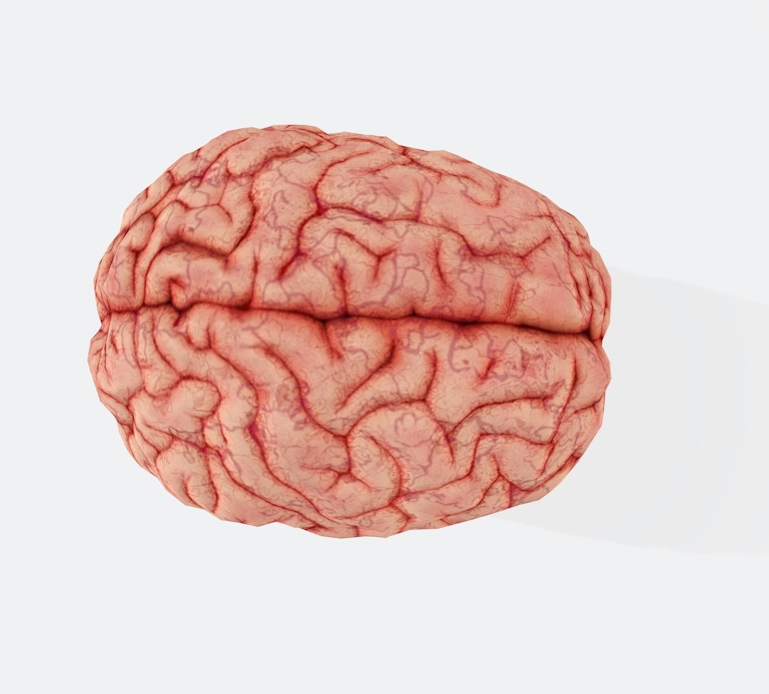
Freedom From Boredom Should Have Been a Blessing
What bigger comfort to the human condition than to take away the emptiness of any moment, if even with mindless distraction?
Anyone who spent a significant portion of their childhood before this technology can tell you it wasn’t always like this. A hollow, aching emptiness once existed before the phone took its place.
Slow painful hours, nights, days, weeks passing by at a crawl because nothing more interesting was going on at the moment. Or because you were waiting for something in the future that promised more excitement.
Never having to endure this again… that is the promise of the device you hold in your hands.
But What Did We Lose in the Process?
Think of any other unnatural comfort we lean on too much. We were designed for survival in a challenging environment, so too much of a good thing often withers and weakens us.
Driving so often that walking seems like the unnatural act. Even when you’re just going down to the convenience store around the corner. Over-sweetened, over-flavored food virtually on tap.
Some say sitting too much is the new smoking.
Too much comfort, and we become like the future humans in Wall-E. Helpless and dependent.
What if our dependence on entertainment and distraction to free us from the hollow pain of boredom is also wearing down our ability to concentrate? FocusMe users often say they can no longer concentrate the way they used to, and the research points the same way: psychologist Gloria Mark has found that the time people spend on one screen before switching fell from about two and a half minutes in 2004 to about 47 seconds.
FocusMe
Block the sites and apps that pull you off a study session, on a timer or a schedule, on your laptop and phone.
Try it free for 14 daysLearning to Be Bored Again
People have gotten so used to busying their minds, they have forgotten what it is like to use them. They have forgotten what it is like to be bored, forgotten what lies on the other side of boredom, and forgotten how boredom, while often painful at first, gives the mind room to breathe and hatch more creative ideas. Leave a person alone in a quiet room for long enough and the mind starts making its own entertainment, and what it makes is often more rewarding than another hour of social media or video games.
What if you could embrace a similar boredom to regain the energy and motivation to get more things done? And respark the natural creativity you were born with?
If you would like to experiment with this idea and reawaken your brain’s ability to entertain itself with fresh ideas and a new hunger for work, here are a few simple ways to try.
The “Do It Or Do Nothing” Approach to Work
This neat little trick comes from Tim Ferriss’s interview with the author Neil Gaiman about his daily routines. Writing books is hard cerebral work and requires intense focus, not an endeavor exactly suited to the constant distractions around us.
Gaiman learned what most of us know but often refuse to admit to ourselves.
This: if you allow the brain other options besides slogging through the heavy cognitive lifting, it will naturally gravitate towards those options.
Gaiman knew that if he wanted to keep producing top notch literary fiction, he needed to starve his brain of this option. So he would go to his gazebo in the garden and sit at his desk, and then either write or stare into nothing. As he describes in the interview, “I think it’s really just a solid rule for writers. You don’t have to write. You have permission to not write, but you don’t have permission to do anything else.”
Seinfeld has spoken of leveraging boredom to write great comedy.
We could all stand to apply this same artificial tunnel vision when we have important work to do that requires deep focus, and it is a great way to rediscover the power of your mind when it has nothing to do. No phone. No talking. No games or puzzles. It’s work or nothing.
What you will find is that the challenges of work take on a lot more intrigue when the only alternative is staring into space. Work becomes less of a chore and more of a fascinating puzzle.
Ditch The Headphones While Working Out

If you like self-development, it is easy to fall into the trap of constantly scouring podcasts and audiobooks for new nuggets of wisdom. There really is a lot of value in them, and it can feel like downloading new possibilities to your brain.
But it is just as easy to overdo it, to the point where you never get a moment of silence. Learning while you work out sounds efficient. It also means one more hour of the day with something in your ears.
A workout is a great moment to let the brain unwind and chew on all the information it has already digested, tackle problems, and come up with new ideas. One widely reported study found that two hours of silence a day grew new cells in the hippocampus of mice, the part of the brain involved with memory and learning.
Instead of thinking you need to feed your brain as well as your body every workout session, think of your routine as an active mindfulness meditation instead, a time to let your mind take the backstage while you center yourself back in your physical body. Feel the movements and the physical challenge. Settle into the moment. Let your mind wander on its own.
If you would still like to fit in some learning time during your gym sessions, no problem. You could just alternate between silence and catching up on podcasts from session to session.
Go on Frequent Walks With Yourself
The same mistake is easy to make on a walk or a jog: taking your headphones removes any possibility that you will have to hear yourself think.
When you read about all the great minds who have had their greatest inspirations while walking, it becomes apparent what a grave mistake this is. Thoreau even wrote the book on it, appropriately titled, “Walking.”
Try taking regular walks in the morning without music or anything else blasting in your ears. You do not need to force your brain to think through something in these moments, either. It is already designed to use these downtimes subconsciously.
Even if you don’t trip over an idea worthy of a Nobel Prize, it will be time well spent. If you set your own schedule, try closing the laptop and going for a quiet walk any time your brain gets overwhelmed in the middle of a work session.
You will often come back with the problem solved and your energy for the work replenished.
Try that scrolling on Facebook.
(You’d be lucky to make it back to work at all.)
Extra tip: Carry a notebook and pen to jot down the inevitable great ideas that will start to surface as you unwind.
Other Quiet Physical Activities
There is something special about moments of mental unwinding that also involve some type of physical activity, preferably something monotonous, where you can zone out and let your subconscious run the show. Doing the dishes is a good example: after a day of working online, it can be exactly the mindless, monotonous job your brain needs to unplug from work.
Bonus points for anything that gets you outside and into nature, away from your digital devices completely. Long drives. Gardening. Fishing. Kayaking. Boating. Hiking. Swimming. Laps in a pool have an especially meditative quality.
You can probably think of plenty of your own.
Just Sit In Silence
Most of us have forgotten what it is like to simply sit in a chair and stare off into space, sip a cup of coffee, and think. Just like every other moment of our lives, sitting always means phone in hand. Or Netflix up on the screen. The news. The latest Taylor Swift song. Maybe a game of chess or sudoku if you fancy yourself especially sophisticated.
Are you starting to get the idea here?
Every single moment of our lives is artificially stuffed with whatever distraction we think will take our minds off the painful state of just existing in the silence. And most of us have gotten so accustomed to living this way, to our brains needing this constant entertainment, that we do not even realize we are doing it.
Tomorrow, try sitting down with just your coffee or tea and nothing else. Stare off into nothing and sit with your thoughts. Do the same in the evening, and take in the benefits of the silence while you are at it.
Turn it into a regular date with yourself.
A great way to implement this habit is to create digital device rules for yourself, forcing yourself to keep all devices off until a certain hour in the morning, and turning them all off at a certain time at night. This way you can make time for your brain every single evening.
These types of rules are good for your sanity anyway.
Hint: FocusMe can help you pull that off. A Weekly Schedule blocks the apps and sites you choose until a set hour in the morning and again after a set time at night, on your computer and your phone.
Teach Yourself To Read Again
Reading a book is an especially valuable pastime because it requires the exact opposite type of mental energy and discipline we use to interact with the internet and social media. Perhaps that’s why people who spend a lot of time online often say they can no longer get through a book.
Spend months, or years, predominantly getting your information online or working with your head in a computer, and when you go to pick up a book, suddenly you just do not have the attention for it anymore. You cannot get through half a page without losing track of what you are reading.
You can, of course, relearn this skill.
And this is why reading is a great tool for teaching yourself the benefits of boredom again. It is not so much that you are doing nothing. After all, you are reading, right?

But by turning off your phone and computer and engaging with the book, by forcing yourself through the laborious cerebral work of relearning to read, you teach yourself some important lessons about what is happening to your brain and what to do about it.
It is not that books are boring, just as it is not that life is boring.
Our brains have just forgotten how to interact with and appreciate the world because we keep them so occupied.
Social Media Fasts
Of course, this is a great way to get your mind adapted to boring moments again. Take regular breaks from being plugged in, and you will have to face the reality of a world without it for a period of time.
This will inevitably reacquaint you with boredom. And listen, it will be painful at first, but that pain will eventually push your mind to seek novelty through other means.
Embrace the challenge. Embrace the boredom. You may fall in love with what emerges on the other side.
The longer the better, but even just having set hours of the day where you can be online and when you cannot is a great place to start.
Again, FocusMe can help you block these hours off completely.
Meditation
Meditation is perhaps one of the most powerful tools you have for getting in touch with your inner self, relieving stress, and honing your focus.
And it’s like a shortcut to boredom benefits.
What better way to inoculate yourself from boredom than to close your eyes, stare into your eyelids, and try thinking nothing? This is the same mental state we need to return to if we want to wean ourselves off of our devices, and retrain our brains to just exist.
Meditation is also known to boost creative thought.
Yes, Go Full Monk Mode
Monk mode gets a bad rap these days.
It’s just the nature of public discourse online to fall in love with a quirky hack and then fall right back out of it.
A balanced approach to life matters too, but for longer projects and goals, monk mode makes sense. By shutting every other possible vice or distraction out when there is something especially important to finish, you can alternate between periods of being plugged into the world and periods of being fully plugged into meaningful pursuits.
You don’t have to do it forever. You don’t even have to do it for months or weeks. You could do it for a few days.
It’s just about being selective about when you are wired into the world and when it’s time to hyperfocus. In this way you get the best of both worlds, drinking up the distraction and other trivial life enjoyments when you want but knuckling down when it’s time to move the needle.
Retrain Your Brain for Hard Things

This might seem to counter the whole point of this article, which is to see what your brain does when you do nothing. It does not.
The reason we gravitate towards distractions and mindless online junk is that we have a natural tendency to pursue comfort and avoid pain. Hard cerebral work is uncomfortable, and some part of us would rather not do it.
But doing hard things is really good for the brain.
Most hard things do not start out fun, but the more we do them, the more we learn to love the challenge. The more it enriches us and changes the way we think. The more it gives us purpose and satisfaction in our lives.
What we need, on a societal and individual level, is to lean into discomfort again, whether physical or mental. We need to retrain our brains to endure longer and longer periods of mental tediousness, boredom, and frustration until we learn how to get through it and see what comes out the other side.
It starts with rebuilding your tolerance for mental discomfort.
Maybe for you this will be something that adds real value to your life, like learning an instrument or martial art. Sticking with something you have never been able to stick with. Getting some kind of degree or certification. The steeper the learning curve, the better.
It may even be something you think you dislike.
Consider this: if other people are absolutely riveted by something and you just do not get it, there is very likely something on the other side of hard work, exposure, and learning that you would find fascinating too.
After all, any topic or skill gets more complex and intriguing the more you learn about it.
Just something to consider.
What You Get Back
Yes, your brain will relearn how to work hard and you will even develop a level of focus, and the time to do it, that has become rare in our society. The ability to focus is now highly valuable, due to its scarcity.
But through rejecting the constant entertainment and distraction, the true reward is you also learn to appreciate some of the really good things in life again.
It’s like giving up sugar and junk food for a couple of weeks.
What happens afterwards?
Suddenly a carrot is bursting with flavor. A banana is the sweetest, creamiest treat you have had in ages.
Similarly, boredom helps us appreciate the good things in life again, and it’s not like you’re just tricking your brain into liking them. Moments with family, a great meal, time in nature: what we often discover is we actually DO like these things more than mindlessly flipping through Facebook.
Who wouldn’t?!
But that is the strange, tragic nature of this beast, isn’t it? The strange tragic nature of many things that addict us. They promise the world to capture our attention, but when you sit down to really think about it, they offer little sustenance in return.
Ready to take a break from the digital numbness, embrace boredom, and appreciate the real world again?
See how FocusMe’s website blocker can help.
FocusMe for students
Study without the tabs that eat the evening
Block the sites and apps that pull you off a study session, on a timer or a schedule, on your laptop and phone.
Start your free 14-day trialNo credit card needed.
Frequently Asked Questions
Is boredom bad for productivity?
Not in itself. A mind with nothing to do starts to wander, and that wandering is where a lot of ideas and solved problems come from. What hurts productivity is filling every empty minute with a screen, so the mind never gets the chance.
How does boredom help creativity?
When nothing is competing for your attention, your mind makes its own connections. That is why ideas turn up on walks, in the shower and while doing the dishes.
How can I practice being bored?
Start small: one walk a day without headphones, a coffee without your phone, a workout in silence. For work, try the rule Neil Gaiman describes: at your desk you may do the work or do nothing, but nothing else.
Can FocusMe help?
Yes. A Weekly Schedule can block the apps and sites you choose until a set hour in the morning and again after a set time at night, on your computer and your phone, which leaves room for the quiet.
First published
Want to talk it through? Join the FocusMe community