
Table of Contents
How Bad News Affects Mental Health in the Age of “Outrage Porn”

Feeling a little obsessed with the news?
In today’s world, information spreads at the speed of light.
We carry supercomputers in our pockets, feeding us real-time information on global occurrences, today’s weather report, and even live feeds from our home CCTV. We “should” be more informed and tuned into our world than ever before, right?
But when inundated with a tidal wave of data, the saying “no news is good news” suddenly takes on a deeper resonance.
Coronavirus. Political spatting. Bias, bias, bias…everywhere.
And the constant presence of violence as the world seems to tear itself apart.
It can feel like the world’s going completely crazy, and when you’re constantly trying to keep up with the day-to-day updates, you might feel like you’re going crazy along with it.
Anxiety from Watching the News Puts a Drain on Mental Resources You Need for Productive Work
It’s no secret that today’s news “machine” thrives on a negativity bias (after all, that’s what humans respond to most).
And the negativity comes with effects that persist long after we stop looking at the screen.
Pervasive negative news distracts you from your most important work or study and leads to a constant feeling you’re all in imminent danger.
In fact, one medical study published in 2007 examined these psychological effects of watching the news. Participants were shown a completely random 15-minute newscast, followed by a 15-minute lecture for one group and a relaxation exercise for the second.
The results were eye-opening…
Anxiety and total mood disturbance immediately increased during the news portion in both groups.
And those who watched the lecture afterwards were still experiencing the negative effects of the news even as they tried to refocus their attention.
But How can I Stop Watching the News?
After all, what if the world implodes and you’re not paying attention?
Don’t we all have a responsibility to stay informed?
Well, living a balanced productive life in a world filled with negative news doesn’t mean you have to go live in a hut on some deserted island…
But do you really need to know everything at every moment?
The key is to develop a discerning mind.
Just as the way we absorb information has changed, we must now develop a new skill.
The skill of managing what we allow into our minds (and what we don’t).
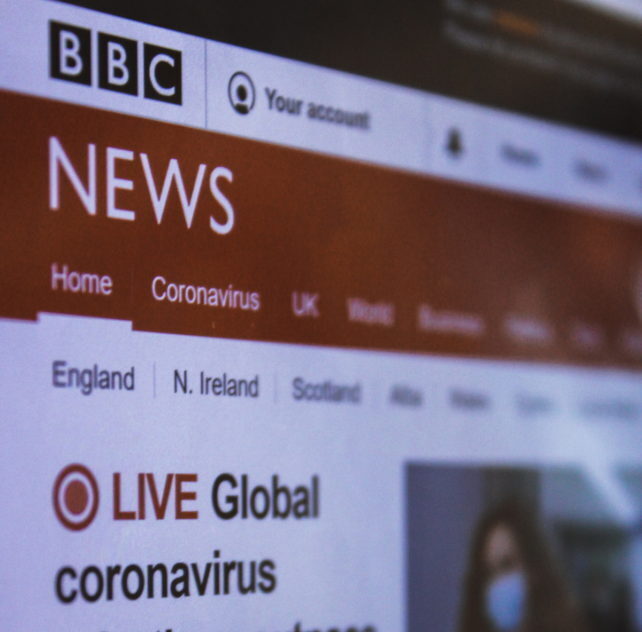
Start By Seeing Outrage Porn for What It Is
There’s no doubt things are a bit chaotic at the moment.
But we’re certainly not living in the first period of history where things felt like they were about to explode.
If you dig into history a bit, you’ll realize people have ALWAYS felt this way.
That’s because the human brain is tasked with alerting us to danger.
When we lived in the wild jungles and prairies, we developed an innate need to see bad things coming before it was too late…
And of course, the media engine makes massive profits exploiting this facet of our nature.
Even when their intentions are in the right place, a dangerous story will always be jucier than a feel-good one.
You’re Certainly Not the Only One Getting Sucked Into the Drama!
Research shows anxiety from being “obsessed” with the news, online or offline, is much more common than we think.
A survey conducted by the American Psychological Association showed that 95% of us follow the news on a regular basis…
56% of us find this regular indulgence (or responsibility, depending on how you see it) stressful and distracting.
And yet a whopping 72% of these subjects recognized that the media blows things out of proportion!
Well, these subjects certainly got one thing right…
The barrage of information certainly has a tendency to blow things out of proportion.
But it’s hard to look away from something so emotionally addictive.
Take a Breath and Regain Perspective With a Little Fact-Checking
Knowing how news sources tend to focus on the negatives, we must become much more cautious when deciding what to let invade our mental space.
If you’ve been letting politically biased news programs – or even worse, the chaos of half truths and irresponsible memes on social media – dictate your emotional state, dig around and regain some perspective.
There are various fact checking databases that help verify information, like FactCheck.org and Snopes to help. These websites collate popular news articles, stories, or even viral posts and cross-check whether they are genuine or not.
No source will be completely bias free, but some try more than others.
Having a skeptic’s eye in place is one of the first steps toward navigating the landscape of information in today’s world. And as you realize one or two news sources have been playing a big role in unnecessarily hyping you up, holding them at arm’s length becomes a no-brainer.
Curate and Ration the News You Do Get to Limit Its Impact
Ever heard the saying that “you are the average of the 5 people you spend your time with?”
Well, the same goes for the data you’re exposed to…
Now that you’re aware of the detrimental effect of being obsessed with the news and are developing the habit of verification, the next step is to curate.
In the old world, the top stories of the day were curated by our daily paper. Not the case anymore…
Social media, water-cooler conversation, or even the radio on your morning commute is a constant stream of information that your brain is subconsciously processing at all times.
Examine the many sources of news you are exposed to throughout the day, and determine if it has actually created any value (or impact at all) in your life.

Ask Yourself, “How Is This News Source SERVING Me?"
“Have I used any of the news they deliver to better my life in the past week?”
“Is the news I’m getting purposely hyped up to create controversy and outrage?”
“Are they just repeating the same things over and over again?”
If you get news reports via email, don’t be afraid to use that unsubscribe link for data sources that aren’t treating your time and attention with respect. On social media, liking or even commenting disagreement will lead the algorithm to send you similar posts.
So keep that in mind before you jump on the bandwagon.
Websites like Facebook and Instagram have an Unfollow (or even Unfriend!) option, which is sometimes the best way to handle people who are caught in the fear-mongering treadmill.
Set a cap on how many times a week you can check the news, while you’re at it.
And avoid looking at the noise at times when a poor emotional state might negatively impact your work. For example, catching up on the latest story first thing in the morning can throw off your whole day if it hits the wrong note.
Of Course You Can Always Stop Being Obsessed By the News By Ignoring it Completely
When you constantly feel the itch to refresh your feeds, it might be a sign that it’s time to take a break…
This article here from Harvard University talks about the effect of smartphones and social media on our minds.
Did you know that dopamine, a “reward chemical” naturally produced by your brain, is released every time you receive a notification on your phone?
When your phone is buzzing constantly, the brain’s reward centers become very poorly calibrated tools. And the same happens no matter where you get your constant “hits” of the news.
You find yourself unable to focus on the important but less exciting task at hand. The brain constantly craves more dopamine-driven “rewards”.
Since your smartphones isn’t going to magically disappear…
Try a Periodic News or Social Media Fast and Regain Control Over Your Attention
We all know about water fasts, intermittent fasting, juice fasts, etc…
It’s the same basic idea: a “news fast”.
Just turn off your notifications and give yourself time to focus on getting important work done. Relearn how to read an in-depth book about a topic. Or how to just sit and think.
FocusMe is a great tool to help block out digital temptations you’re struggling to resist. With a couple clicks you can block access to websites that keep dragging you off track.
A great way to minimize time on news sites or social media, FocusMe is fully-customizable and comes with a 30-day free trial.
Everyone’s mind could use a bit of calibrating from time to time. I recommend taking a digital fast on a regular basis (or anytime you’re starting to feel obsessed with the news again).
After all, what’s most important…the reward of 50 new likes, or a fully completed to-do list?
Don’t Worry…The Most Important News Always Finds a Way to Reach You
Sure, the news has long been an integral part of human society.
Yes, communicating and staying informed was crucial to our survival, whether it was through the town criers of old, or newspapers and digital feeds in our modern era.
But the reason news is so effective at hitting our buttons is because we’re hardwired to share it.
That means people will share it with you naturally whether you’re connected or not!
So if you’re ready to be more discerning about how you absorb news and information…
But don’t want to be an irresponsible modern citizen…
Trust that the most important news will reach you, whether or not you refresh your newsfeed 100 times a day or not.
We Promise There’s Still a Saner World Out There Waiting
While today’s news cycles are often more about “outrage porn” than actually keeping us well-informed and connected…
Most of the world still lives in relative harmony.
After all, when’s the last time you thought the world was about to collapse when you were actually walking down the real-world street?
Most people aren’t at each other’s throats, arguing, hurting each other, and threatening to go to war.
Most of life is still pretty darn good.
When we divert ourselves from constantly checking in with what’s happening on our phones, we begin to discover the beauty of the real world around us again. This is the world that more directly affects our physical and mental wellbeing.
And living more deeply “in” it can restore your peace of mind.
In a society that’s full of the fear of missing out…
Become a person that experiences the joy of missing out!
FAQs (Frequently Asked Questions)
Constant news consumption, especially negative or sensational stories, triggers the brain’s stress response, which can increase anxiety, worry and emotional distress, even if you’re not directly affected by the events.
Yes. Being absorbed in news feeds and updates can drain mental resources and distract you from important tasks, making it harder to focus on work, study or personal goals.
A desire to stay informed is understandable, but constant checking, especially multiple times an hour,can lead to stress, overload and an imbalance where news consumption outweighs time spent on meaningful activities.
Yes, frequent exposure to negative headlines and stories can skew your perception of the world and heighten fear or pessimism, because news outlets often focus on dramatic or alarming content to capture attention.
Not necessarily. You can stay well informed by choosing a few trusted sources and checking updates at set times, for example, once in the morning and once in the evening, instead of constantly refreshing news feeds.
A news fast means stepping away from news and social feeds for a set period, like a day or several hours, to break habitual checking and give your mind space to rest. This can reduce stress and improve focus.
Yes. Social platforms often surface sensationalised or repetitive news designed to keep you engaged, and liking or interacting with posts trains the algorithm to show you even more, reinforcing the habit and distraction.
Ask yourself whether a news source brings value to your life, unsubscribe from feeds that cause stress, and choose reliable outlets that focus on facts rather than fear or outrage. Limiting sources and filtering content can help you stay balanced.
Yes, reducing the frequency and volume of news you read or watch can lower anxiety levels, reduce emotional overload, and help you regain perspective and emotional well-being.
Set fixed times for checking news, turn off push notifications, avoid doom-scrolling, and consider getting concise summaries instead of continuous updates. This way you stay informed without sacrificing your peace of mind or attention.