Prefer to read offline? Download this article as a PDF
The Hidden Dangers of a Sedentary Lifestyle in the 21st Century
Of all the health risks we face in the 21st century, one of the least talked about is our increasingly sedentary lifestyle.
Here is why we need to move more.
Sedentary is not a word you hear thrown around a lot, which is ironic when you consider how much time we spend that way. It describes time spent doing almost no physical activity, mostly sitting. For a lot of us that is upwards of six hours a day, and in some cases much more. Take sleep into account and only a fraction of the day is left for movement. The effects of this relatively new way of living are becoming more apparent all the time.
Compared with most of our ancestors in hunter-gatherer or farming societies, our bones are thinner, our muscles weaker and our stamina diminished. “But,” you say, “modern technology more than compensates.” Perhaps, but lost strength and stamina are not the only consequences. The World Health Organization reports that 31% of adults worldwide do not reach the recommended level of physical activity, that people who are physically inactive have a 20% to 30% higher risk of death than people who are sufficiently active, and that the problem is found in rich and poor countries alike.

Health Risks Associated with a Sedentary Lifestyle
A sedentary life raises the risk of cardiovascular disease, including strokes and heart attacks. It contributes to type 2 diabetes and obesity and makes both worse. It is also associated with higher risks of colon cancer, high blood pressure, osteoporosis, depression, anxiety and a long list of other physical and mental conditions.
Another problem is that sedentary lifestyles go hand in hand with other unhealthy habits such as smoking, drinking too much and a poor diet, each of which raises the same risks again. Chronic diseases linked to these habits are now the leading cause of death in most of the world, and most of them are preventable.
Unsurprisingly, the cure is movement. That part is obvious. The whole picture is a little more complicated.
Exercise vs Activity
Our modern idea of physical activity is quite different from that of most people who ever lived. For most of us, being more active means joining a gym or a pilates class.
Yet those activities have existed for only a few generations. Even much older ones, such as dance, yoga and the early forms of sport, were mostly practiced for cultural or spiritual reasons rather than as exercise.
The idea of doing intense physical activity for health or enjoyment is relatively recent. It has grown alongside our reliance on technology, our unprecedented amount of leisure time, and the gradual realization that sitting still is bad for us.

Today we have countless sports to choose from. We admire professional athletes and want to be leaner, fitter or stronger. But do those ideals have much to do with health? Less than you would think. Olympic medalists, for example, live on average 2.8 years longer than the general population: a real gain, but a modest one for a lifetime of training. Meanwhile many of the healthiest and longest-lived people on the planet have never set a single hour aside for exercise.
Keep Moving
The so-called Blue Zones, such as Sardinia in Italy and Okinawa in Japan, are famous for being home to some of the oldest and healthiest people in the world. At first, scientists assumed good genes. Then a well-known study of hundreds of pairs of Danish twins showed that longevity is only mildly heritable, and hundreds of studies since have examined the lifestyles of people in the Blue Zones to work out their secret.

Some of the answers: a sense of purpose and belonging, not smoking, mostly plant-based diets, and clean air. But one factor seems to matter more than the rest.
These people move constantly. Instead of intense exercise they do hours of low-level physical activity almost every day. To match them, or our prehistoric ancestors, you would need to walk well over 10,000 steps a day, which most of us will never manage without a seven-mile walk at lunch.
Fortunately there is a more realistic target. A Cambridge-led analysis of data from more than a million people found that 60 to 75 minutes of moderate activity a day offset the higher risk of early death that comes with sitting for eight hours or more, and that being inactive was a bigger risk than the sitting itself. Three quarters of the people studied did not manage that much, so the target is worth taking seriously. The WHO’s minimum is lower: at least 150 minutes of moderate activity a week, with less sitting on top.
What Is Moderate-Intensity Activity?
Moderate-intensity activity is anything that involves a lot of movement without pushing your heart rate or breathing to high levels. If you can still talk more or less normally while doing it, it counts. Some examples:
- Brisk walking and easy to moderate hikes
- Cycling at a gentle pace
- Gardening
- Light dancing
- Canoeing or paddling
- Woodwork and other crafts
- Some forms of yoga
- Housework and light maintenance
- Playing games in the garden with your kids
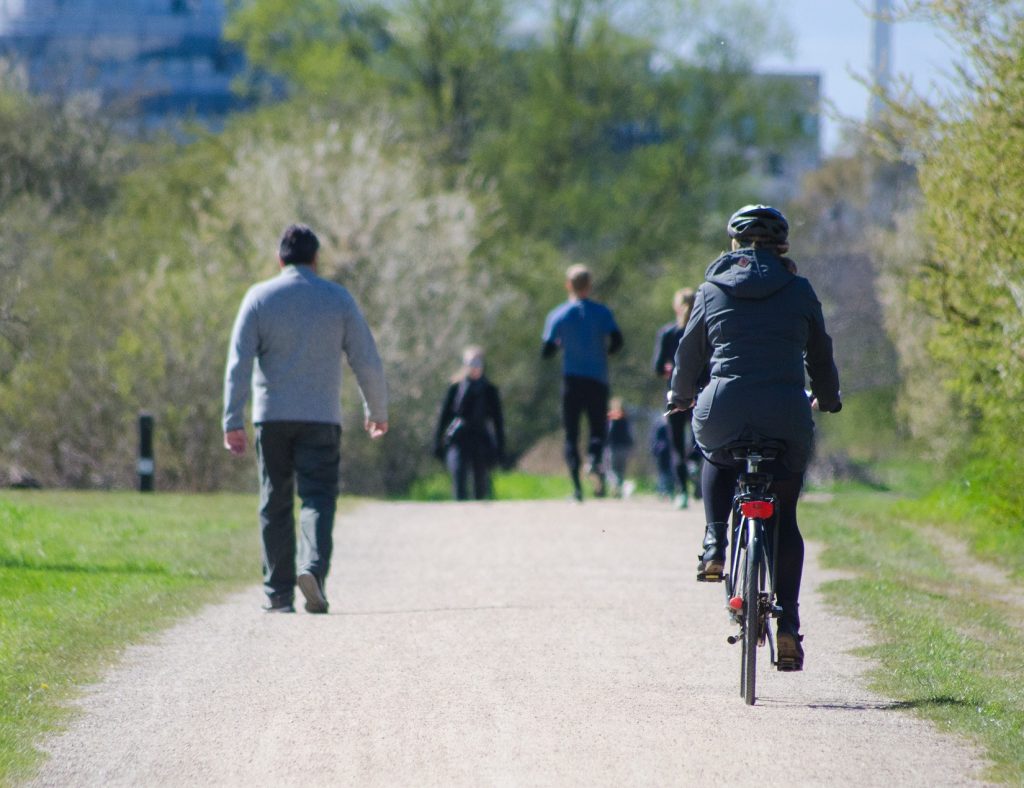
One of the best ways to make sure you move enough is to build one or more of these into your morning or evening routine. Other good ideas: a standing desk, the stairs whenever possible, and a pedometer or smartwatch to keep score. If the thing that keeps you in the chair is the screen, FocusMe‘s Screen Break mode locks it at the intervals you set, so you actually get up; and for what movement does for your working day, see How Exercise Impacts Your Overall Productivity.
Ultimately you will need to find what works for you. Just remember that life and movement go hand in hand.
FocusMe
Make the habit you want the easy one
Block the sites, apps and games that pull you back, on a schedule you set in advance, with protection that holds until the time is up.
Start your free 14-day trialNo credit card needed.
FAQs (Frequently Asked Questions)
What exactly defines a “sedentary lifestyle”?
A sedentary lifestyle typically means spending much of your waking hours sitting or reclining, for example at a desk job, during commutes, or while watching TV, with little or no regular physical activity.
Why is sitting too much considered so harmful?
Prolonged periods of inactivity, even if you exercise occasionally, are linked to serious health risks such as heart disease, type 2 diabetes, obesity, certain cancers and an increased risk of premature death.
Can a sedentary lifestyle affect my mental health too?
Yes, lack of movement and extended sitting has been associated with a higher risk of depression, anxiety, and reduced psychological well-being.
Does a sedentary lifestyle make diseases more likely even if I’m otherwise healthy?
Yes. Even people with a healthy weight or occasional workouts are at increased risk if they sit for long hours daily. Prolonged inactivity independently raises the risk of cardiovascular disease, metabolic disorders, and other chronic conditions.
How does prolonged sitting affect my body’s metabolism and weight?
When you sit too much, your body burns far fewer calories, your metabolism slows, and the ability to break down fats and sugars is impaired, increasing the likelihood of weight gain, insulin resistance, and type 2 diabetes.
What impact does a sedentary lifestyle have on bones and muscles?
Inactivity leads to weaker muscles and reduced endurance, and over time bones may lose mineral density, increasing the risk of conditions like osteoporosis or other bone- and muscle-related issues.
Is cardiovascular health seriously affected by sitting too much?
Yes, extended sitting is strongly linked with raised blood pressure, poor circulation, increased cholesterol levels, and higher risk of heart disease, stroke or other circulatory problems.
Are there certain cancers linked to a sedentary lifestyle?
Research suggests that inactivity may raise the risk of several cancers, including colon, breast and uterine cancers, especially when combined with other risk factors like obesity.
How often should I move or exercise to counteract a mostly sedentary day?
The WHO recommends at least 150 minutes of moderate activity a week; an hour or so of moderate activity a day offsets most of the risk of a desk-bound day. Break up long periods of sitting with short movement breaks (standing, walking, stretching) as well.
What simple daily habits can help reduce the risks of a sedentary lifestyle?
Take short walking breaks every hour if you work at a desk. Try standing meetings or walk-and-talks instead of always sitting. Use stairs rather than lifts, and walk instead of driving for short trips. Include regular exercise, brisk walking, cycling, yoga, or other activities you enjoy.
Want to talk it through? Join the FocusMe community